
Scott County’s Regional Wanted List
The best local source is the Morgan-Scott-Cass Crime Stoppers Most Wanted page. It spans three counties. So it is not a Scott County Sheriff's warrant ledger. The page warns that warrants were active when posted. They may not be when you view them.
A listing helps if you know a location, a failure-to-appear matter, or a named charge. It cannot confirm the person is wanted today. Warrants get served, recalled, or tied to new court events after publication. Scott County has no verified public warrant-search portal. Keep the tip list and the official court path separate.
Photos stay on the Crime Stoppers page. They are not rehosted here. A face alone is never a solid identity match. Read the name, birth date, physical details, last known address, and reason together. Then confirm current status with the Sheriff or Circuit Clerk.
To see the source yourself, open the regional Most Wanted page:
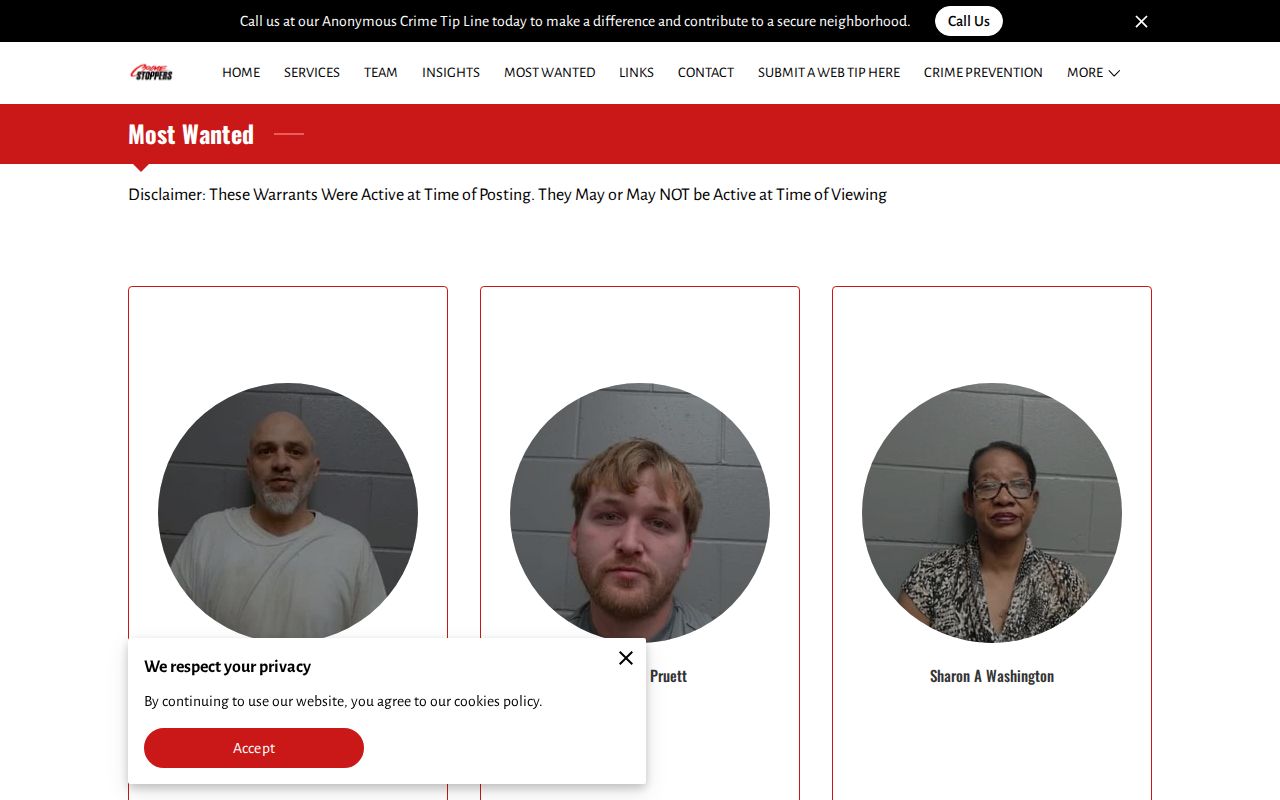
This source is built for browsing, not for tracking daily bookings. Crime Stoppers operates it, and its coverage stretches well past Scott County.
What a Scott County Wanted Listing Shows
Each regional listing offers identifiers plus the reason for the public lead. Fields vary from entry to entry. Read the details below as an aid. Never treat them as a substitute for confirming a warrant's current status.
| Listing field | What it means |
|---|---|
| Name | The name posted by the Crime Stoppers program. Confirm spelling with an official record. |
| Photo | A source image when the listing supplies one. It remains on the source page and is not a court finding. |
| Date of birth | An identifier used to distinguish people with similar names. |
| Sex, race, height, weight | Physical descriptors from the posted listing. They should not be used alone for identification. |
| Hair and eyes | Additional descriptors that can change over time. |
| Last known address | A historical locator field, not proof of a current address. |
| Wanted reason | A posted charge, failure-to-appear reason, or other basis for the listing. |
| Status warning | The program’s notice that a warrant was active when posted and may not remain active. |
The warning field matters most. It keeps a dated public list from being mistaken for a live court database. Someone listed for failure to appear may resolve the matter later. A posted charge can be reduced or dropped as the case moves. So the warning guards against reading too much into a single snapshot of the list.
How to Read the Wanted List Safely
Use the Crime Stoppers page to share information. Do not use it to confront anyone. If you recognize a listed person, save the listing details and go through the official tip route. The program's anonymity tools exist to keep the public out of direct contact with someone wanted by police.
- Open the regional Most Wanted page and confirm that the listing concerns the Morgan, Scott, and Cass program rather than another state or county.
- Read the full entry, including the name, descriptors, reason for the listing, and the warning about the date the warrant was active.
- If you have a location or safety tip, use the anonymous web form or the Crime Stoppers phone. Do not message the listed person or approach them.
- If you need to check a person’s arrest or case history, use the Scott Sheriff and Circuit Clerk paths. A later booking may appear in a host jail, not in Scott County.
- Write down the source date and then verify the current warrant status before treating the listing as active.
The record path and the tip path are different things. Take a listed person booked into Greene County. That booking record sits with Greene. The case stays in Scott Circuit Court. The Scott County records and custody path shows how to ask which facility received someone and how to request a booking photo.
Photos belong on the official Crime Stoppers source. No gallery is built here. No face is copied. No listing is framed as a current arrest result. Readers can misidentify a person, and an old listing can linger after its warrant is gone.
Crime Stoppers Tips, Anonymity, and Rewards
Crime Stoppers gives the public two ways to share what they know. One is a phone line at 217-243-7300. The other is an anonymous CityProtect web-tip form. Each tip becomes an investigative lead for police. It won't say whether someone sits in custody. It also won't reveal how a court case stands.
Regional Crime Stoppers
For tips involving Morgan, Scott, or Cass County, use the program's official phone and web routes.
217-243-7300
Immediate danger
Never try to stop someone yourself. Call emergency services for an immediate threat. Use the tip route for information.
The program's reward eligibility page spells out who cannot collect, including people tied to law enforcement, the wanted person, bail or supervision roles, family members, and the program itself. No guaranteed reward amount is published. Never promise payment to a tipster.
A tip channel is not a custody source, and the records chain shows why. Crime Stoppers collects information from the public. The Sheriff or police agency investigates and may make an arrest. A host jail keeps the booking record, and the Circuit Clerk later shows the court case. Those events can land on different dates and in different counties.
Here is the anonymous-form source view:

The form exists to pass along information about a person or event. It cannot tell you whether a warrant is active or where someone is being held.
How to Check a Scott County Warrant
Scott County has no dedicated online warrant-search tool. Start instead with the Circuit Clerk. The Illinois courts courthouse directory lists Staci Evans as clerk, reachable at 217-742-5217, along with a Judici link for online case files. Judici can show you an active case in a hurry.
There is one catch. The statewide Illinois Courts e-business page offers no direct Scott County link in its 7th Circuit row. So a positive search result helps, but an empty result does not clear somebody. Only the Clerk or the Sheriff can settle that question for sure.
- Ask the Circuit Clerk how to search the public Scott case record in Judici or at the courthouse. Use the person’s full name and case details if known.
- Ask the Scott County Sheriff at 217-742-3141 how it confirms current warrant status. A public wanted page is not the Sheriff’s complete ledger.
- Compare the court case, warrant notation, failure-to-appear entry, and any later recall or service information. Record the date checked.
- If the question concerns a person, do not ask a friend or public comment thread to intervene. The person should speak with an attorney or the court about a lawful resolution.
- For a safety tip, use Crime Stoppers or emergency services. A warrant check and a tip are different requests.
Each source answers a different piece of the puzzle. The courts track one case. Crime Stoppers curates regional alerts. The Sheriff knows the current status. Call the office directly rather than guessing.
None of these channels invites you to warn someone, hide them, or confront them. Leave that to the people with arrest powers.
A wanted listing is not a custody listing. When your search starts with a booking photo, the custody path in Scott County's home record guide is the right next step. A person can be wanted and free at the same time.
If that person later lands in state custody, the Illinois Department of Corrections Individual in Custody Search will show it. IDOC covers sentenced and state-held people, though. It will not confirm a fresh Scott booking or a live warrant.
Warrant Types and Court Status
A warrant label names a legal process. That is all it names. Scott County's public sources offer no full online breakdown of warrant types, so the table leans on the basic distinctions worth raising when you call the Clerk or the Sheriff about a specific case.
| Status term | What to confirm |
|---|---|
| Arrest warrant | Whether a judge issued it, which case it concerns, and whether it remains active or has been served. |
| Bench warrant | Whether it followed a missed court appearance or another court event and whether the court later recalled it. |
| Failure to appear | Whether the entry is a reason for a listing or a current court status. It can change after the person appears. |
| Served or recalled | Whether the warrant was executed, withdrawn, or otherwise no longer active. |
| Wanted-list entry | A public Crime Stoppers lead. It is not the same thing as a live warrant confirmation. |
Get the court case number and ask when the record was last checked. If an arrest happens, the holding jail's paperwork may name the arresting agency and the charge. The court, in turn, decides how the case ends. Keeping those pieces separate helps everyone, including a person stuck on a stale wanted list.
Why a Scott County Listing Can Change
The Sheriff maintains a public Facebook page, though no regular booking-photo schedule has been documented there. A 2017 KWQC report describes a past wanted-photo campaign built on Crime Stoppers tips. That history proves nothing about a present-day "Warrant Wednesday" series or any daily Scott arrest feed.
Illinois law also restricts booking-photo posts for lower-level offenses, with some exceptions. A quiet social feed therefore tells you almost nothing. Go to the record holder, and keep custody status apart from court outcome.
Safety first. Never approach, follow, threaten, or try to detain anyone on a wanted list. Pass tips to Crime Stoppers or law enforcement. If a warrant touches your own life, an attorney or the court is the safe door to walk through.
A most wanted listing works like a tip sheet. It can change fast. Someone featured one week may be gone the next. That's because the Sheriff's Office, the receiving jail, and the Circuit Clerk each hold a different piece of the record. A booking charge can shrink or vanish as a case moves. So can a wanted entry itself. When you need to know how things truly ended, the court disposition is where to look.